How One IT Manager Built 24 Flows on the UK's Largest Road Project
The £1.5bn A14 Cambridge to Huntingdon scheme is a joint venture between Costain, Skanska and Balfour Beatty. Its IT Manager evaluated Nintex, K2 and Power Apps, chose FlowForma, and has since built 24 flows himself — from the permit to dig to the weekly VIP site tour.
Printed documents physically shared to collect six or seven sign-offs
Platform
FlowForma Process Automation on Office 365 and SharePoint, with forms in the BI database
The pain points and the benefits
The Processes
Permission to Dig
Site Visits Requests
Joiners and Leavers
Labour Requests
Material Requisition
IT Project Requests
The Pain Points
Manual processes
Excessive paperwork
Distributed workforce
Poor governance
The Benefits
Faster processes save days
Familiar interface and excellent value
Integrated data for better reporting
Better governance (with audit trail)
Accessible over mobile
Single source of truth for all data
The Next Steps
Integration with a GIS (Geographic Information System) platform will make mapping processes more efficient; and there are plans to extend FlowForma Process Automation into other areas of business.
The Challenge
The A14 Cambridge to Huntingdon Improvement Scheme is the largest road construction project in the UK, a £1.5bn joint venture between Costain, Skanska and Balfour Beatty. From the outset, the project faced the same logistical challenges around business processes that all site-based work must deal with. Three on-site compounds were quickly connected with fibre broadband by the A14 Integrated Delivery Team (IDT), enabling some sharing of spreadsheets and other information over email.
But there were still approval processes that depended on printing out and physically sharing documents to get them signed off. With a huge volume of paper in the system, documents inevitably got lost and mistakes were made. The IT Manager was determined to do something about it.
He had very clear ideas about the solution. “One of our mantras in IT is about having a single source of truth around data. I wanted to centralize and standardize data across projects, ensuring a consistency – you have to make sure that an apple is an apple to everybody involved,” he explained.
“
The adoption of IT is quite poor in construction. We still rely on a lot of paper-based processes, people having to meet face-to-face and share documents to get things done.
IT Manager, A14 Integrated Delivery Team
The Solution
The IT Manager went looking for an automated workflow solution that could remove the dependency on paper-based processes and give the joint venture project the single source of truth he was looking for. He was considering several products when he came across FlowForma Process Automation on Microsoft App Source (formally known as App Store). The decision was easy, because FlowForma Process Automation addressed all three of his priorities: it was built on the SharePoint platform, requires no coding skills, and represents excellent value for money.
Microsoft Office 365® and Microsoft SharePoint® are cloud application. The IT Manager liked the platform – he had already used SharePoint for a Material Requisition process, but needed more functionality to deliver the workflows he wanted.
No code was important because it supported a plan to make workflows less IT-centric and enable the wider business to build their own processes. The value proposition was helped because FlowForma Process Automation’s tight integration with Microsoft meant existing Microsoft investments were maximized. Because it’s a cloud service, it’s easily accessed over mobile devices, which was also important to A14 IDT. It operates a Bring Your Own Device policy, which FlowForma Process Automation is able to support with Android and iOS compatibility.
To get fully up to speed, the IT Manager took advantage of FlowForma SureStart, a four-step onboarding program. He also had direct support from FlowForma’s Customer Success team that would walk him through all he needed to know. Once he was familiar with its logic, he was soon developing his own “flows”. To date, he has developed 24 flows, primarily electronic forms that overcome the challenge of bringing together disparate teams of six or seven stakeholders to sign-off on requests.
Four of the flows, described
Flow
What it does
Permit to Dig
Typically an approval request procedure that used to involve downloading a document, filling it in and sharing it with the team. It is now an automated electronic process.
Site Visit Request
Authors the VIP site tours that take place every week — essentially a scheduling process with multiple components that need to be coordinated, from drivers and vehicles to the timing of each stop.
Material Requisition
Originally built on SharePoint alone. Moving it to FlowForma Process Automation provided a lot more functionality and increased its efficiency; its data now sits alongside the business intelligence reporting.
IT Project Requests
Introduced by the IT team itself, to ensure new initiatives can be properly assessed and aligned to business strategies.
Other processes included Joiners and Leavers and Labour Request.
The Outcome
The collective impact of FlowForma Process Automation has saved A14 IDT days in time by automating processes and cutting down on paperwork. “You can complete processes much quicker and with mobile access you’re enabling people in the field to work on forms from anywhere – you’re not waiting for someone to get back to their desks,” he said.
Increased efficiency is one benefit; another is better governance. At the end of a project, field teams are expected to hand over all of the data around its processes, providing an accurate audit trail of everything that happened. “Using FlowForma Process Automation, we can generate PDFs of the forms and push them through to our document control and records management people. It saves a lot of time, instead of having to find paperwork and scan it,” he said.
This is why The A14 IDT wants to extend the role of FlowForma Process Automation to the wider businesses, where there are literally hundreds of processes that could be transformed into auditable flows. “It’s a potential game-changer,” the IT Manager said. Another business benefit is the way FlowForma Process Automation integrates with the IDT’s reporting capabilities. Forms are captured in the same SQL database that’s used for business intelligence. “So if there’s a spike in drainage works, for example, we can align it with the Material Requisition form in FlowForma Process Automation. With the two data sets together you get a much better picture of what’s going on,” he said.
Another plan is to integrate FlowForma Process Automation with its GIS (Geographic Information System) platform. By connecting the two and keeping both sets of data in one place, mapping processes will become much more efficient. FlowForma has also shown its flexibility in the way it addresses specific needs of the construction sector, not least the challenges that inevitably come with joint ventures.
Summing up, he said the ability to rapidly deploy multiple processes has been key to successful adoption. He also praised the way support has always been readily available. “It’s been a good vendor experience,” he commented. “FlowForma have been quick to respond to any queries and they are genuinely interested in our business.”
“
With different companies working together, there can be some arguments over whose processes are used. Using FlowForma Process Automation enabled us to draw a line in the sand and say, 'this is the A14 process that we will use moving forward'. It guarantees consistency.
We looked at Nintex and K2, from our point, they were cost prohibitive. We didn't feel that we would be going down the no code route and still would need a lot of influence and support from IT, so we didn't want to pursue that.
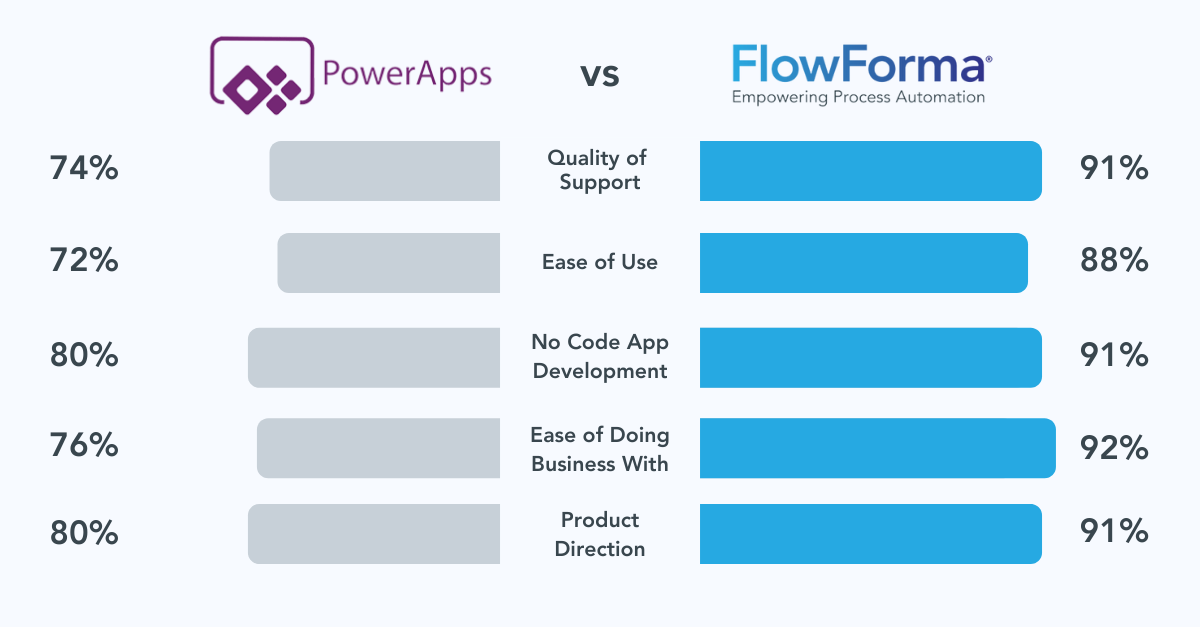
We looked at PowerApps, which again didn't really fit the bill. Some features seemed quite good, but once we dived into it a bit more, it became quite evident we were going to need to have skills around accessing APIs and doing a bit of Java.
FlowForma Process Automation met all our requirements.