From my experience working with hospitals and medical clinics in the UK and Ireland, healthcare organisations operate within a complex regulatory environment shaped by evolving reimbursement models, strict privacy requirements, and increasing compliance expectations.
Having worked closely with FlowForma's healthcare customers over the past ten years, I've gained valuable insights into how relying on manual contract management processes can introduce unnecessary risk, slows down approvals, and makes it harder to maintain consistent compliance across teams.
A modern healthcare contract management system needs to support the full contract lifecycle. This includes contract creation, structured approval workflows, compliance validation, key date tracking, and defensible audit trails that stand up to regulatory scrutiny.
In fact, our recent survey of healthcare decision-makers found that 84% of their teams identify missing data as the top challenge to maintaining hospital efficiency. This guide offers practical solutions for tackling the challenges of manual healthcare contract management, introducing a platform designed to meet your needs.
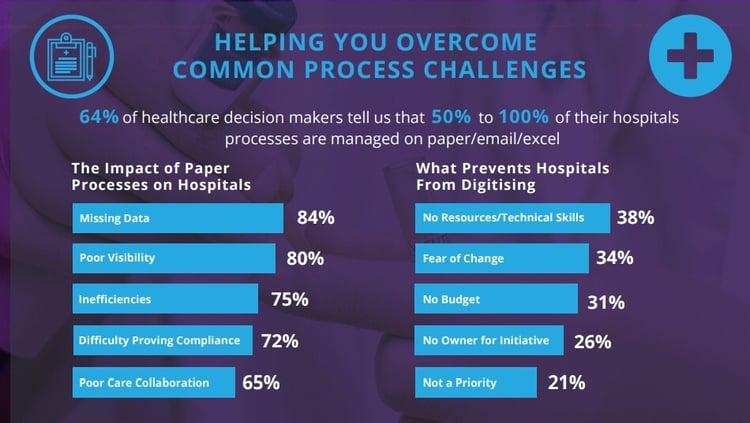 FlowForma's Healthcare Survey Results
This guide:
- Reviews the leading healthcare contract management software available in 2026
- Assesses how effectively each solution supports healthcare operations, regulatory compliance, and day-to-day efficiency
- Explains why FlowForma is often selected over traditional contract management software when healthcare organisations require governed automation and end-to-end transparency
- I’ve included a real-world demo of how to manage healthcare contracts with AI
What is Contract Management for Healthcare?
Contract management for healthcare involves managing complex contractual agreements across hospitals, insurance providers, pharmaceutical companies, and external partners. Healthcare contract managers oversee the full contract lifecycle while ensuring legal compliance and managing contract risk assessment.
Healthcare contracts often include intricate reimbursement structures and strict regulatory requirements. Effective contract management improves operational efficiency by standardising contract reviews, approval workflows, and provider onboarding processes.
By using automation tools instead of manual contract management, healthcare organisations reduce risk, improve compliance, and maintain visibility into contract terms.
Common Contract Types in the Healthcare Industry
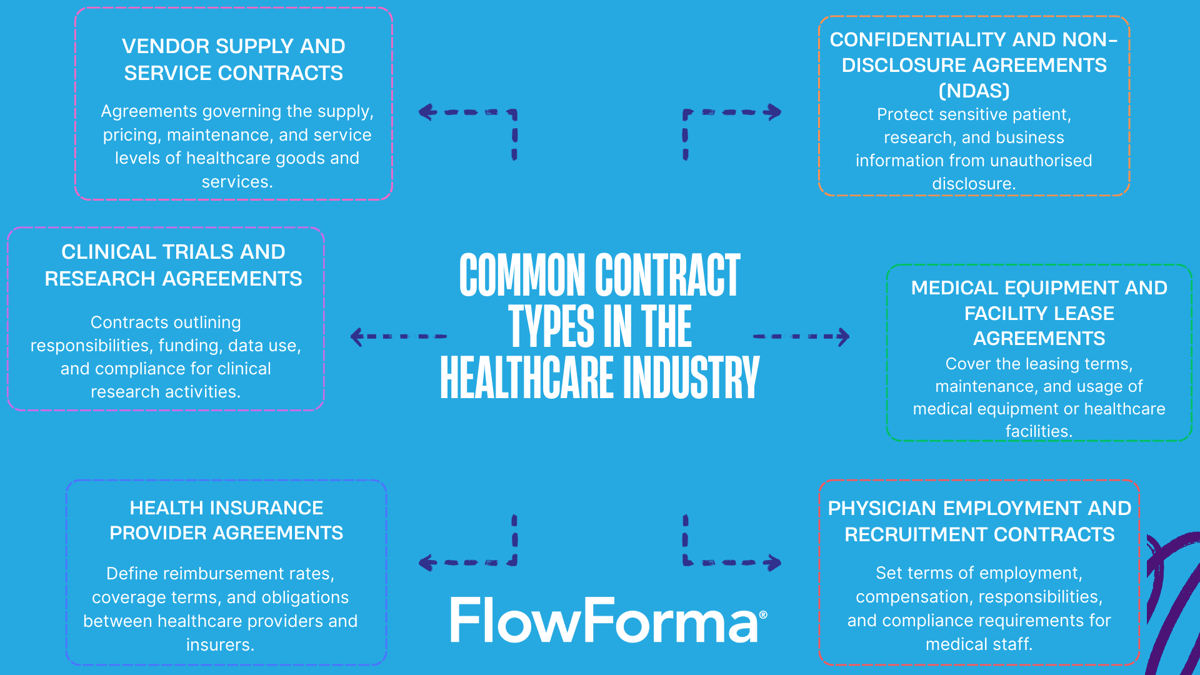 Healthcare Contract Types
Also read: Learn all about healthcare contract management and best practices here.
In this video, you’ll hear from Laurent Kelly, Intelligent Automation Developer at Blackpool Teaching Hospitals NHS Foundation Trust. Blackpool Teaching Hospitals NHS Foundation Trust is one of FlowForma’s trusted healthcare customers. In the video, Laurent describes the benefits of moving from paper-based systems of recording to a digital management system for records. If you’re thinking about automating your contract management, his advice is well worth hearing.
10 Top Healthcare Contract Management Tools in 2026
Different healthcare contract management systems are built to address different needs.
If your priority is procurement alignment and spend visibility, tools such as Coupa and Agiloft are a strong fit. If you need healthcare-specific templates and provider contracts, symplr Contract is designed for that use case, while ContractSafe and Concord focus primarily on basic document storage and collaboration.
However, if your requirement is end-to-end healthcare contract lifecycle management — including automated workflows, built-in compliance checks, audit trails, and transparent pricing that scales across departments — FlowForma is designed specifically to support this level of operational and regulatory control.
|
Platform
|
Best For
|
Strength in Healthcare
|
Compliance Coverage
|
|
Coupa Contract Management
|
Procurement-led health systems
|
Spend-linked contract management
|
SOC 1, SOC 2, GDPR
|
|
FlowForma
|
Mid-sized to enterprise healthcare organisations managing complex workflows
|
End-to-end healthcare contract lifecycle management
|
HIPAA, GDPR, ISO 27001, SOC 2, audit trails
|
|
Contract Logix
|
Legal teams in healthcare
|
Clause and obligation control
|
SOC 2, GDPR
|
|
symplr Contract
|
Hospitals and provider networks
|
Healthcare-specific contract processes
|
HIPAA-aligned workflows
|
|
Agiloft Contract Management
|
Large enterprises with complex rules
|
Configurable compliance logic
|
SOC 2, GDPR, configurable controls
|
|
Zoho Contracts
|
Small healthcare organisations
|
Cost-efficient contract management
|
GDPR, ISO 27001
|
|
ContractZen
|
Governance-focused healthcare teams
|
Compliance visibility
|
ISO 27001, GDPR
|
|
Contractbook
|
Fast-moving healthcare teams
|
Contract creation speed
|
GDPR
|
|
ContractSafe
|
Hospitals needing document access
|
Centralised repository
|
SOC 2
|
|
Concord (Worldwide)
|
Distributed healthcare providers
|
Collaboration and versioning
|
SOC 2, GDPR
|
Comparison table showing the key features of the 10 top tools for healthcare contract management
10 Healthcare Contract Management Systems in 2026
Let us now analyse the key features, pros, and cons of each tool in detail:
1. Coupa
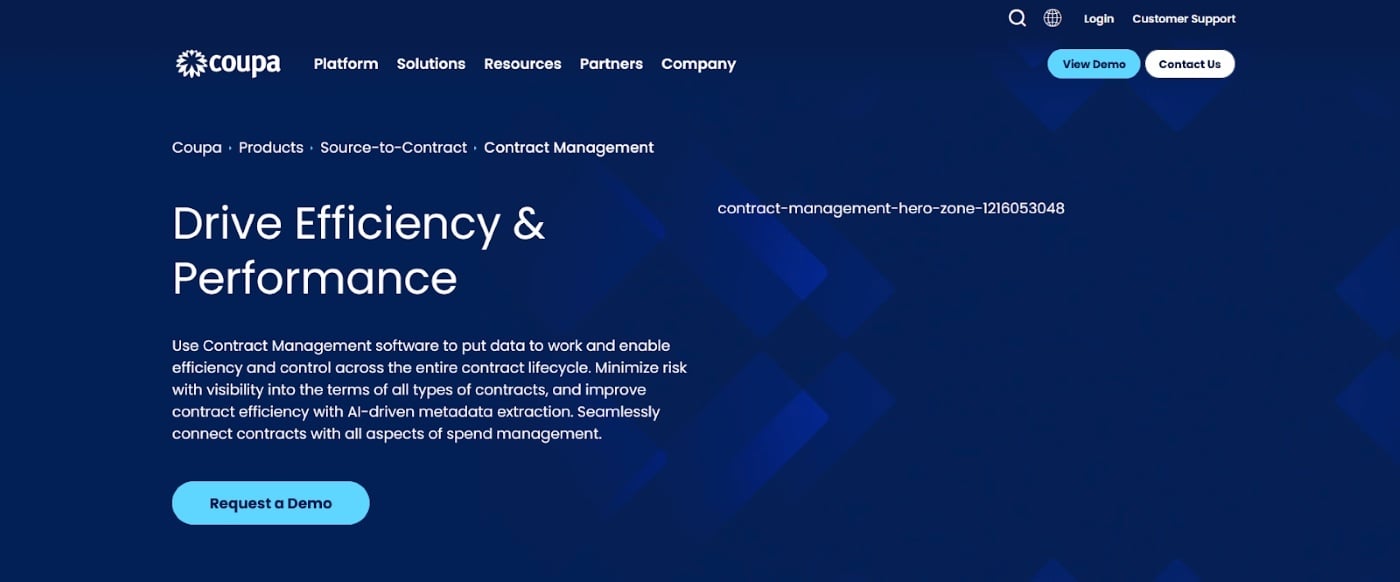
Coupa contract management page
Coupa is designed for healthcare organisations where contract management is closely tied to procurement and supplier spend.
Health systems often use Coupa to manage vendor agreements, pricing compliance, and financial exposure, rather than to manage the broader contract lifecycle across clinical or operational teams.
Coupa’s Key Features
- Contract lifecycle tracking linked to procurement
- Supplier and spend visibility across contracts
- Approval workflows integrated with purchasing
- Contract compliance monitoring
- Financial reporting and analytics
Coupa’s Pros
- Strong procurement and financial governance
- Clear visibility into supplier contracts
- Mature enterprise platform
- Scales across large health systems
Coupa’s Cons
- Limited flexibility for non-procurement contracts
- Pricing complexity as additional modules are added
2. FlowForma
FlowForma is an AI-powered business process automation platform that supports healthcare contract management by treating contracts as governed, auditable workflows rather than static documents.
Healthcare organisations use FlowForma to automate contract creation, approvals, renewals, compliance checks, and provider onboarding while maintaining full visibility across the contract lifecycle.
Built on Microsoft 365, FlowForma keeps critical data secure and offers transparent pricing with no hidden costs as contract volumes grow.
FlowForma’s Key Features
Here are FlowForma’s key features:
-
No-code automated workflows for managing healthcare contracts
-
Centralised repository with structured document management
-
Built-in compliance module supporting regulatory and legal compliance
-
Automated alerts for renewals, expiries, and key dates
- AI-assisted workflow creation and contract intelligence
- Microsoft 365 data residency and access controls
FlowForma’s Pros
- Strong alignment with healthcare industry regulatory requirements and adherence to NHS UK standards
- Transparent, process-based pricing
- Improves compliance through embedded approval workflows
- Automated document and form generation features for accurate, audit-ready data capturing
FlowForma’s Cons
- Best suited for Microsoft-centric healthcare organisations
FlowForma’s Pricing
FlowForma has transparent, process-based pricing with no hidden costs.
3. Contract Logix
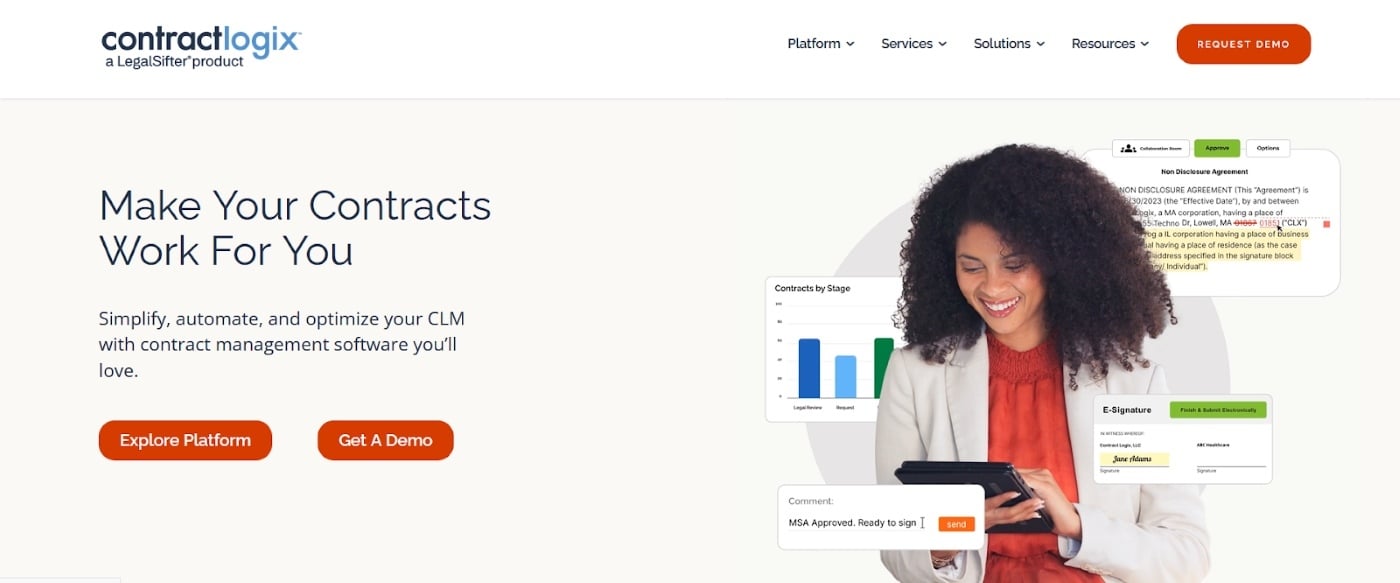
Contract Logix Homepage
Contract Logix focuses on legal-centric contract lifecycle management. Healthcare organisations typically use Contract Logix within legal and compliance teams to manage contract terms, obligations, and reviews, rather than across broader healthcare operations.
Contract Logix’s Key Features
- Centralised contract repository
- Clause library and obligation tracking
- Legal approval workflows
- Compliance reporting
- Renewal and expiry tracking
Contract Logix’s Pros
- Strong legal compliance controls
- Structured contract reviews
- Clear approval workflows
- Contract review and version control
Contract Logix’s Cons
- Limited automation for operational teams
- Less effective for cross-department contract processes
4. Symplr Contract
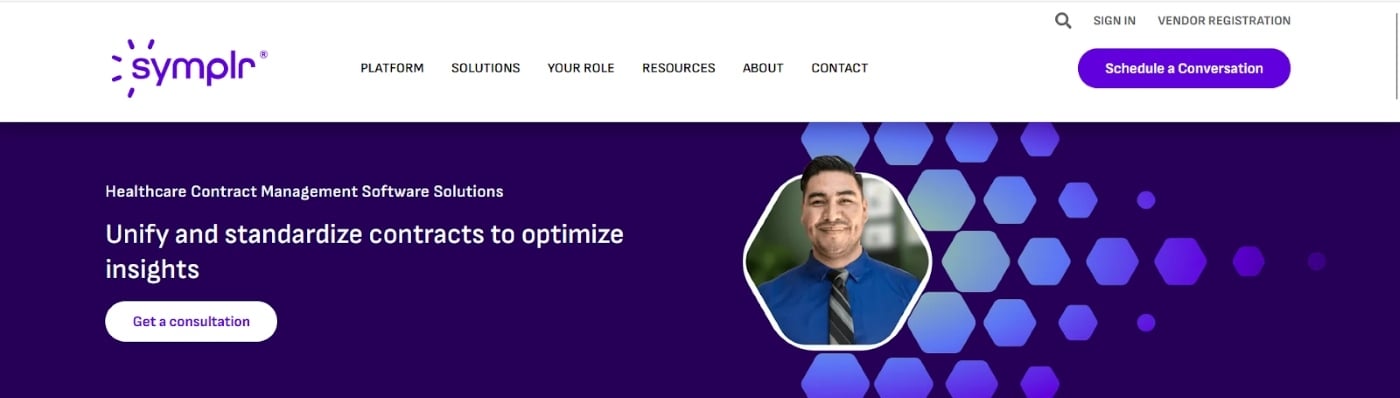
Symplr Contract Homepage
Symplr Contract is purpose-built for the healthcare industry, focusing on provider, payer, and vendor agreements. Hospitals and healthcare providers often choose Symplr for its familiarity with healthcare regulations, though customization beyond predefined workflows can be limited.
Symplr’s Key Features
- Provides contract lifecycle management
- Credential and obligation monitoring
- Automated alerts for renewals and expiries
- Centralised contract repository
- Reporting dashboards
Symplr’s Pros
- Healthcare-specific design
- Alignment with healthcare regulatory requirements
- Familiar workflows for hospitals
- Compliance visibility
Symplr’s Cons
- Limited flexibility outside healthcare-specific templates
- Less transparent pricing
5. Agiloft

Agiloft homepage
Agiloft supports highly configurable contract lifecycle management for large healthcare enterprises. It is often used by organisations that require complex contract rules, custom approval logic, and deep configuration to manage diverse contract portfolios.
Agiloft’s Key Features
- Advanced workflow configuration
- Rule-based contract automation
- Clause and obligation management
- Custom reporting and dashboards
- API integrations
Agiloft’s Pros
- Configurable for complex regulations
- Enterprise compliance support
- Flexible contract lifecycle management
- Supports detailed contract risk assessment
Agiloft’s Cons
- Requires experienced administrators
- Higher implementation and maintenance effort
6. Zoho Contracts
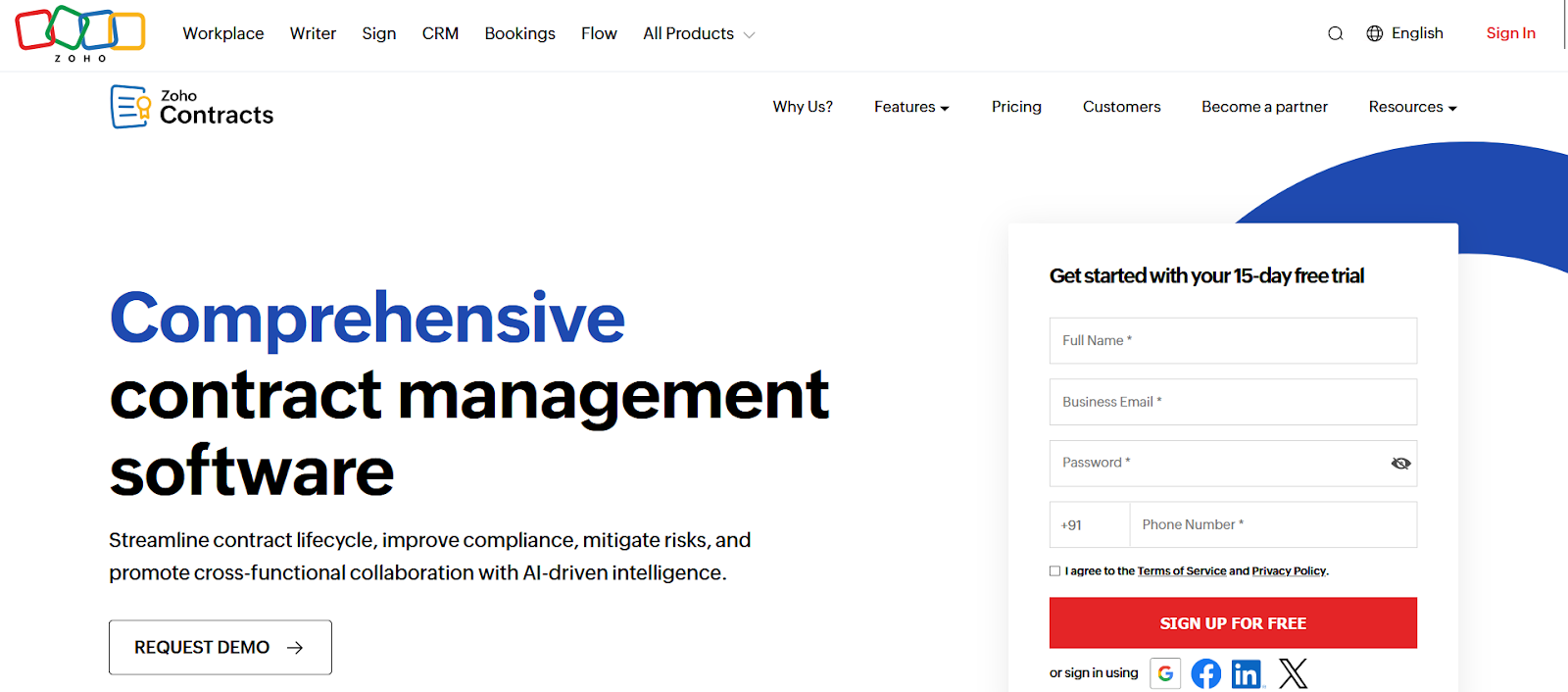
Zoho Contract’s Homepage
Zoho Contracts is a lightweight contract management software option for smaller healthcare organisations. It helps teams move away from manual contract management and shared drives, but lacks depth for complex healthcare regulations.
Zoho Contract’s Key Features
- Contract creation and templates
- Renewal and key date tracking
- Clause library
- Zoho ecosystem integrations
- Basic reporting
Zoho Contract’s Pros
- Easy to deploy
- Simple user experience
- Suitable for small healthcare teams
- Reduces manual processes
Zoho Contract’s Cons
- Limited healthcare-specific compliance features
- Not ideal for complex contract lifecycles
7. ContractZen
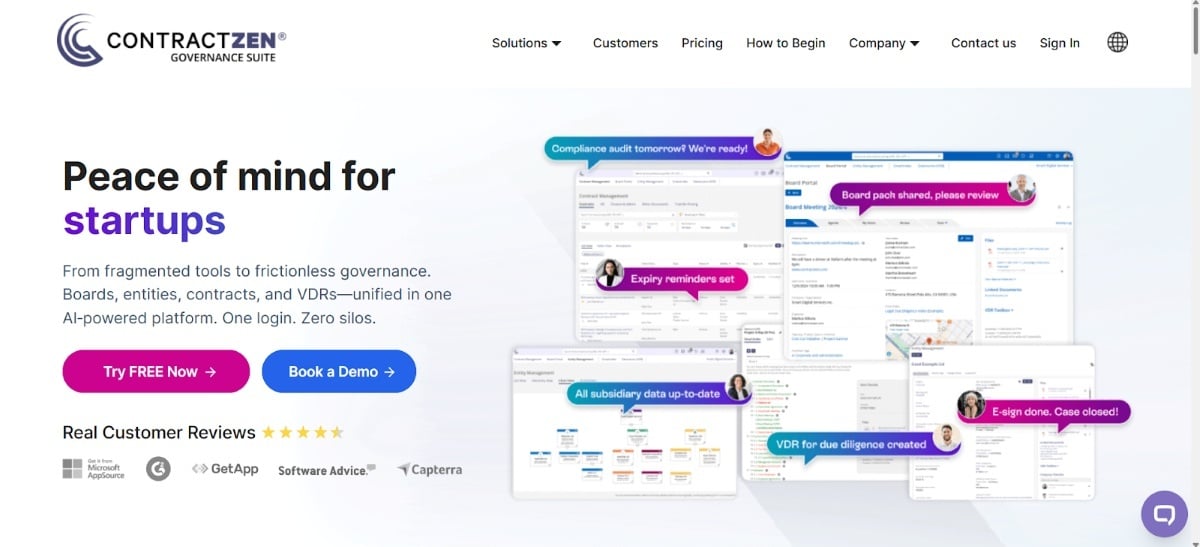
ContractZen’s Homepage
ContractZen combines contract management with governance and compliance tracking. Healthcare organisations use ContractZen to gain visibility into contracts and obligations rather than to automate complex contract processes.
ContractZen’s Key Features
- Centralised contract repository
- Compliance calendars and reminders
- Obligation tracking
- Governance dashboards
- Secure access controls
ContractZen’s Pros
- Focus on compliance and governance
- Clear contract portfolio visibility
- Easy adoption
- Secure document management
- Audit visibility
ContractZen’s Cons
- Limited workflow automation
- Not designed for end-to-end contract processes
8. Contractbook
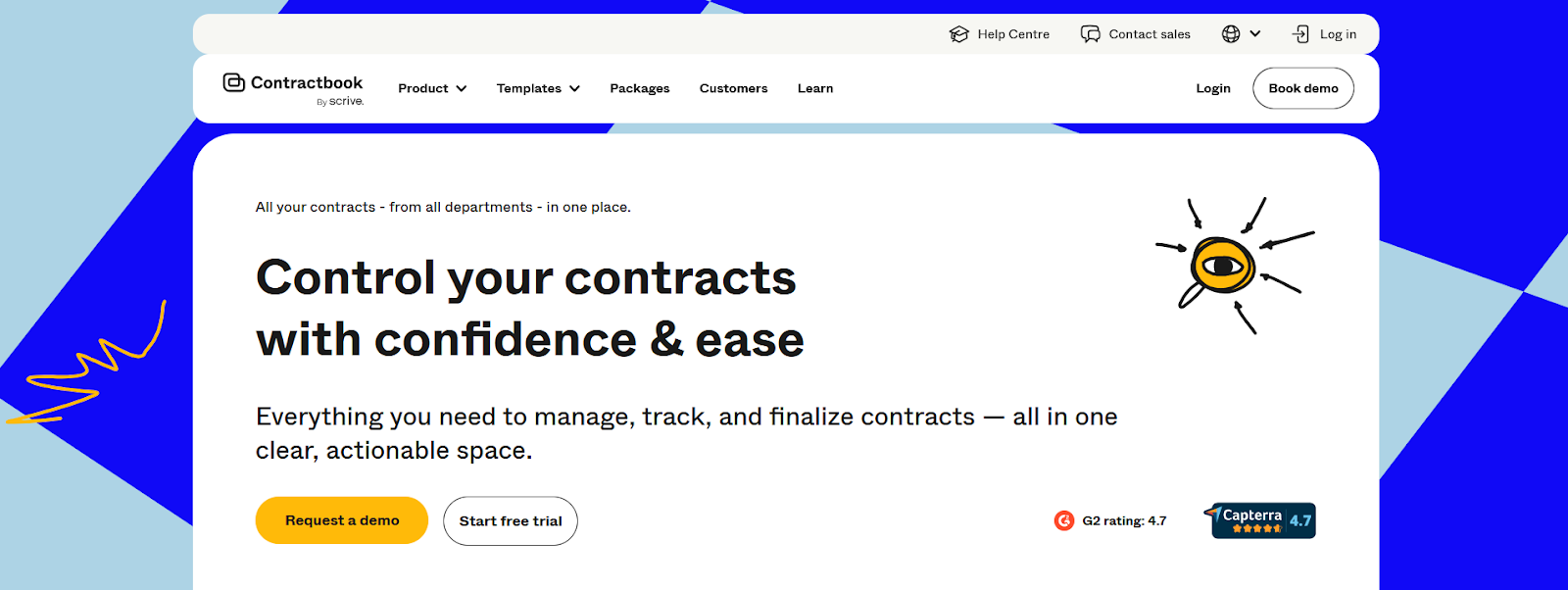
ContractBook Homepage
Contractbook emphasises fast contract creation and automation. Healthcare teams often use Contractbook where speed matters more than deep regulatory oversight.
Contractbook’s Key Features
- Digital signatures
- Workflow templates
- API integrations
- Version control
- Contract analytics
Contractbook’s Pros
- Fast setup and deployment
- Clean interface
- Automation-first design
- Developer-friendly
- Good for growing teams
Contractbook’s Cons
- Limited healthcare compliance tooling
- Less audit depth
9. ContractSafe
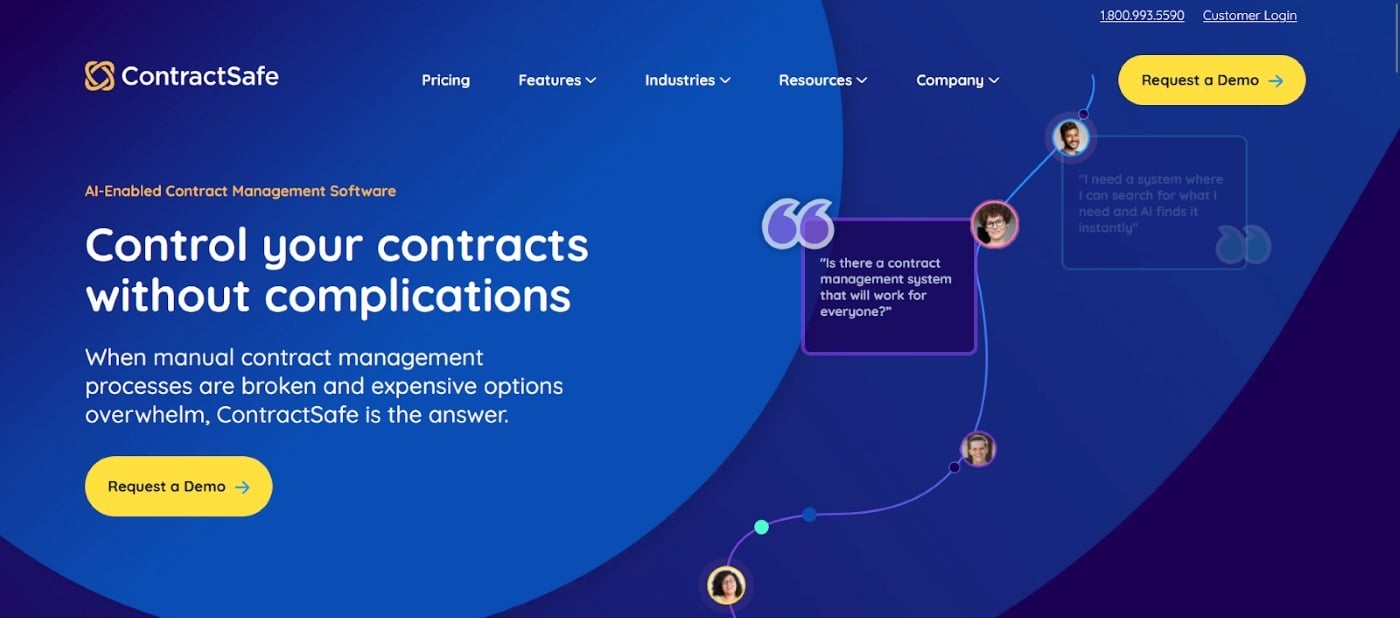
ContractSafe Homepage
ContractSafe is primarily a document management tool rather than full contract lifecycle management software. Hospitals use it to replace shared drives and improve contract accessibility.
ContractSafe’s Key Features
- Centralised repository
- Permission controls
- Automated alerts
- Metadata tagging
- Secure document storage
ContractSafe’s Pros
- Quick implementation
- Supports document search and OCR
- Minimal training required
ContractSafe’s Cons
- Limited automation tools
- Weak contract compliance workflows
10. Concord
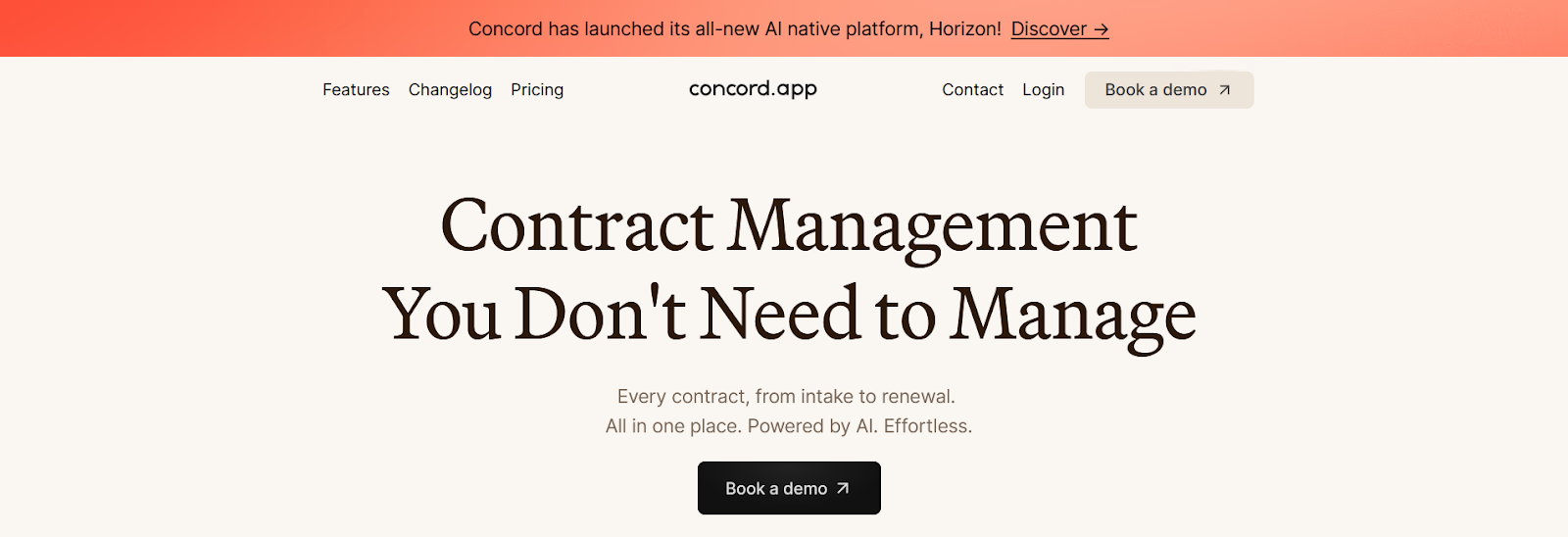
Concord Homepage
Concord supports collaboration and version control across distributed healthcare teams. It is commonly used to manage agreements across locations but offers limited depth in healthcare-specific compliance.
Concord’s Key Features
- Contract collaboration
- Version history and tracking
- Global access
- Reporting tools
Concord’s Pros
- Easy contract sharing
- Intuitive interface
- Supports distributed teams
- Quick adoption
Concord’s Cons
- Costs increase with usage
- Limited healthcare regulatory controls
Why FlowForma is the Best Tool for Healthcare Contract Management
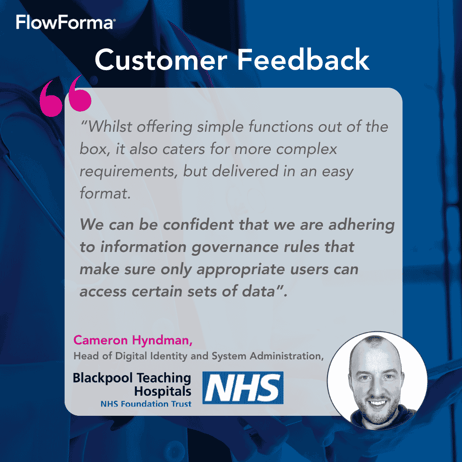
Most contract management software focus on documents or legal teams. Healthcare organisations need more than that. They require a systematic approach to healthcare contract lifecycle management that embeds regulatory compliance, audit trails, and approval workflows directly into contract processes.
FlowForma stands out by combining automated workflows, Centralised contract management, compliance checks, and transparent pricing on a single platform.
Unlike tools that add cost or complexity as contract volumes grow, FlowForma supports healthcare organisations with scalable, governed automation. For healthcare providers managing complex regulations, contracts, and risk, the tool offers a clearer path to compliance, efficiency, and control.
Book a demo to learn more.
.png?width=175&height=42&name=logo_20(1).png "FlowForma Process Automation")
.png)






![Healthcare Contract Management: A Complete Guide [2026]](https://www.flowforma.com/hubfs/Healthcare-contract-management.webp)