How LSTM Launched 65 Workflows in 14 Months and Retired Its Paper Travel Forms
The world's oldest school of tropical medicine sends academics to disease-endemic countries, and every trip needed four paper forms and the right level of sign-off. Eight trained staff had the first two workflows live within a month.
Travel Assist, bank transfers, foreign currency requests, finance sign-off
Platform
FlowForma Process Automation on SharePoint Online and Office 365
The pain points and the benefits
The Processes
Finance and travel approval
The Pain Points
Custom solutions expensive and ineffective
Lack of user engagement
Disconnect between users and processes
Inefficient dependency on paper trails
The Benefits
Turnaround times dramatically reduced
Compliance made easy
Different departments more engaged
Collaborative culture replaces departmental silos
Self-service processes create a better fit for academics
Better value than customized software
Leverages existing IT investments
The Next Steps
Every department is now engaged in replacing paper-based processes with best practice processes.
The Challenge
Liverpool School of Tropical Medicine (LSTM) is the oldest school of tropical medicine in the world, with hundreds of staff working across the globe. When the School was awarded HEI status in 2013, this presented an opportunity to leverage the very latest technologies and design its IT infrastructure from scratch.
The decision was taken to become a cloud-first organization, building an environment on Microsoft cloud services, including Office 365®, SharePoint Online®, Skype for Business® and Azure®. There was also a need to introduce Business Process Management (BPM) solutions, replacing paper based processes that were inefficient and made compliance a challenge.
“
There was a big demand for electronic workflows, but progress was slow because we only had limited internal resources able to create them and outsourcing was expensive. It was one piece of the jigsaw we were finding difficult to fit.
Martyn Coleman, IT Systems Architect, Liverpool School of Tropical Medicine
The Solution
Several BPM products were trialled before LSTM came across FlowForma Process Automation. A successful workshop used real examples of existing workflow requirements, and convinced management and IT that they had found the missing piece.
Tightly integrated with the SharePoint platform, the no code FlowForma Process Automation tool is a perfect fit for LSTM and its cloud-first strategy. Eight people were trained by a local FlowForma partner, the first two workflows went live within a month. Others quickly followed and the solution was soon embedded in the organization.
One particular process around travel typified the paper dependency this registered charity was trying to escape. Sending staff to disease-endemic countries all over the world to undertake research and interventions, LSTM requires that employees assess the risks and get the appropriate level of sign-off before every trip. Four paper forms had to be filled in, with some duplication across forms.
Earlier attempts to introduce electronic systems that ticked both boxes had failed. FlowForma Process Automation succeeded for many reasons, not least because it leveraged the SharePoint investment, making it easier to create new flows and share them. It addressed the complexities of the travel requirements without being too onerous to complete.
Rather than simply replicate paper-based processes, it introduced new efficiencies and encouraged cross-department engagement. “The best thing about FlowForma Process Automation for me is that you can come up with a specification to deliver a solution that involves all the stakeholders,” said Coleman. “In the case of Travel Assist, there were a couple of curve balls around the process that we were able to address very quickly because of the flexibility and ease of use of FlowForma Process Automation.”
Self-service components make it more accessible to users, while links from inside the system to outside sources, like the government travel advice service and travel health advice providers, made risk assessment easier. “We get good quality compliance data out of Travel Assist and a way to nudge travellers along on a process they have to complete,” said Coleman.
“
On the one hand, we needed the Travel Assist process to provide robust risk assessments. On the other, we don't want our talented academics spending hours filling in forms.
Martyn Coleman, IT Systems Architect, Liverpool School of Tropical Medicine
The Benefits
LSTM has launched 65 workflows in the 14 months since FlowForma Process Automation was deployed. An organization that was once “awash with paper form based processes” is seeing huge efficiency gains. Finance flows have been particularly successful, replacing paper trails that depended on people being available for sign off. Requests for a bank transfer or foreign currency are now electronic processes, where authorization is just one in a series of automated steps.
FlowForma's impact on the way LSTM works has been profound, according to Coleman, democratizing the development of process improvements. Departments are more involved than when they outsourced development to third parties. New processes are turned around more quickly and better aligned to the business need.
The intuitive interface of FlowForma Process Automation has been central to its success. FlowForma Process Automation has also helped to encourage a culture of collaboration: “As soon as FlowForma Process Automation delivered a couple of high profile wins, everyone started to think about their own practices and how they could make them cross-departmental and improve them.”
Martyn Coleman has also been impressed by FlowForma as a solutions provider. “We have had a very good support experience and there has been a helpful exchange of information on both sides that has led to product improvements. Their interest doesn't stop when you sign the invoice,” he said. “I really like the FlowForma team and I've only had positive experiences. We've been treated very well and have a high level of access to their expertise if we need it.”
“
I have no development skills at all but I'm a very confident user of FlowForma BPM.
Martyn Coleman, IT Systems Architect, Liverpool School of Tropical Medicine
Customer Feedback
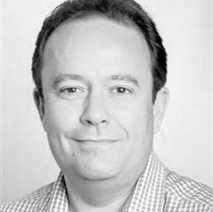
Martyn Coleman
IT Systems Architect, Liverpool School of Tropical Medicine
“
In the case of Travel Assist, there were a couple of curve balls around the process that we were able to address very quickly because of the flexibility and ease of use of FlowForma Process Automation. As soon as FlowForma Process Automation delivered a couple of high profile wins, everyone started to think about their own practices and how they could make them cross-departmental and improve them.
Martyn Coleman on why LSTM went looking for a no-code tool, how quickly the first workflows landed, and why the travel request process was the one to start with.