This guide is for US procurement and legal leaders who need contract workflows running this quarter: Chief Procurement Officers, VPs of Procurement, and the legal operations and IT teams who evaluate contract lifecycle management (CLM) software with them.
Your supplier agreements are waiting on email approvals today. The CLM program on the roadmap won’t reach them until after another budget cycle.
What you need now is one contract workflow live, with an audit trail, before the next renewal deadline passes unnoticed. The Icertis alternatives that are quicker to implement in 2026 are FlowForma Contract, Juro, SpotDraft, Ironclad, HyperStart CLM, LinkSquares, Concord, and Oneflow. Most vendors quote weeks rather than months, but their figures measure different milestones, so compare the time to your first production workflow, not the headline go-live claim.
We checked each vendor’s speed, pricing, and scope claims on its own pages in October 2026, and included platforms that publish a speed figure or let you start without a consulting project.
|
Platform |
Best for |
Vendor-stated time, as of October 2026 |
What that figure covers |
Pricing model, from the vendor’s pricing page |
|
FlowForma Contract |
Procurement-led teams running purchases, tenders and contracts on one system |
A business-critical process up and running within a couple of hours |
Building one process |
Pricing on request |
|
Juro |
Legal teams letting sales, HR and procurement self-serve |
30 days or less (target); 18 to 21 day average (Juro guide, August 2025) |
First contracts sent from Juro (milestone 2) |
Custom plan priced on contract volume and integrations; unlimited users |
|
SpotDraft |
In-house legal teams that want setup and migration done for them |
2 to 6 weeks or 4 to 6 weeks, by page |
Go-live |
Priced on users or contract volume; implementation included |
|
Ironclad |
Enterprise legal operations with complex approval logic |
100% adoption in under 2 months |
Adoption |
Custom quote; implementation sold in packages |
|
HyperStart CLM |
Mid-market teams moving a legacy repository fast |
3 days, 1 month, or 4 to 6 weeks, by page |
End-to-end implementation |
Priced on users or contract volume, never both; implementation included |
|
LinkSquares |
Legal and finance teams that want a consultant-led rollout with reporting in place at go-live |
Most customers within 90 days, some in six weeks |
Full go-live |
Personalized quote based on users, volume, modules and implementation support |
|
Concord |
Small teams that want published pricing |
Core setup in a day; full adoption in 2 to 3 weeks |
Setup, then adoption |
Essentials from $499 per month, paid annually, 5 users included |
|
Oneflow |
Sales teams creating contracts from CRM records |
Not published (checked October 2026) |
Not published (checked October 2026) |
Annual plans: Business includes 5 users; Enterprise is a custom quote with 10 users |
How long does Icertis take to implement in 2026, and why do buyers look elsewhere?
Icertis’s headline speed figure is relative. In a March 2026 release, it reported a 70% reduction in implementation timelines across 2025, without saying what those timelines were reduced from. Buyers still look elsewhere when they need a first workflow live this quarter, or when the real need is approvals and a repository rather than enterprise contract intelligence.
What changed at Icertis in 2025 and 2026
The same release reported a record number of go-lives in 2025. In an October 2025 post, Icertis credited the faster timelines to preconfigured solutions with embedded setup and closer work with its systems integrator partners.
The release also describes SAP Ariba Contract Intelligence by Icertis, which speeds deployment with preconfigured integrations, and names Icertis as the only SAP Solution Extension for contracting with native SAP Ariba integration. For an SAP Ariba customer, that route is a genuine accelerator.
A percentage without a baseline doesn’t help you plan, though. If your last quote said nine months, that cut means something very different than if it said eighteen.
Why buyers still shortlist alternatives
Icertis describes itself as an AI-native contract intelligence company building an enterprise-wide contract intelligence layer. That's the right description for a business with thousands of agreements across many entities, where the hard problem is finding and enforcing obligations after signature.
Many teams that start an Icertis evaluation have a narrower problem. Supplier agreements sit in inboxes, nobody can say who approved the last renewal, and the auditor wants that record by Friday. For that problem, a platform built for portfolio-wide intelligence can be more than you need to buy, configure and train for before the first contract moves. The alternatives below trade some of that depth for a shorter path to one working flow.
What does "quicker to implement" actually mean for a CLM?
Vendors use "implementation" for four different milestones: account activation, first workflow live, first production deployment, and organization-wide rollout. A 30-day claim usually covers the first two. Several vendors on this list publish different figures for the same milestone, so before you compare numbers, ask which milestone each one describes.
These are the four milestones, in the order they happen:
- Account activation: The workspace exists, admins are trained, and templates are loaded.
- First workflow live: One contract type moves from request to signature in the new system.
- First production deployment: Real contracts for one team run there by default, not in email.
- Organization-wide rollout: Every team that touches contracts works in the platform, with legacy contracts migrated.
Each vendor’s figure maps to one of these milestones. Juro’s implementation guide measures success by the time it takes you to create and send contracts, which is milestone 2. The same guide, dated August 2025, gives an 18-day average in one section and a 21-day average in another.
HyperStart’s own pages give three durations for the same end-to-end implementation: 3 days, 1 month and 4 to 6 weeks. SpotDraft’s pages quote 2 to 6 weeks to go live on some comparisons and 4 to 6 weeks on others.
Two vendors separate the milestones themselves. Concord's own rollout data splits one-day setup from 2 to 3 weeks of adoption. LinkSquares publishes a 90-day plan that dates each block of work up to go-live.
Whichever vendor you pick, the first workflow is the part you control. Choose one contract type with a clean template and a single approval path, and the vendor's figure starts to mean something. If you're still deciding whether you need full contract lifecycle management software at all, settle that before you compare timelines.
The 8 Icertis alternatives that are quicker to implement
Each entry defines the platform, names what shortens its setup, and gives its pricing model and one limitation, all checked on the vendor’s own pages in October 2026. FlowForma Contract comes first; the rest follow in no ranked order.
1. FlowForma Contract
Best for: Procurement-led organizations that run purchases, tenders, and contracts on one system.
FlowForma Contract is an AI-native product from FlowForma that brings people, AI agents, and automation together to run contracts, procurement, and tender management processes, with every approval, rule decision and agent action on record.
It runs the commercial process in three modules: procurement management, contract management, and tender management for organizations that run tenders. AI agents cover the routine work, from procurement intake to award notification. The product connects to any system with an API connector, most often ERP and finance systems.
What speeds setup: Your purchasing policy becomes rules your team writes, and agents act inside them. AI chat entryways turn a described process or a diagram into a working process. Business critical processes can be up and running within a couple of hours. That covers building one process; organization-wide rollout still depends on your templates, data, and approvers.
Pricing model: Pricing on request, separate from FlowForma Process Automation plans. The company is certified to ISO/IEC 27001:2022 and holds Cyber Essentials.
Limitation: The tender module serves organizations running tenders, so suppliers writing bid responses need a bid-writing tool.
2. Juro
Best for: Legal teams that want sales, HR, and procurement to self-serve on routine contracts.
Juro is a browser-based CLM platform for drafting, negotiating, and signing contracts in a single shared document. Legal teams control the templates and workflows, and colleagues in other teams create contracts from them without legal involvement.
What speeds setup: Juro runs vendor-led onboarding. Its Legal Engineers set up your key templates and integrations, and once you’re activated, your admins change or create workflows themselves with no code. Juro counts a customer as activated when they start sending contracts through it, and its implementation guide targets 30 days or less.
Pricing model: Every plan includes unlimited users, workflows and templates, with price set by contract volume and integration complexity (as of October 2026).
Limitation: Juro’s pricing page says its deeper integrations, such as Salesforce, HubSpot, and Workday, cost extra. If your contracts start in a CRM or an HR system, put those connectors in the first quote rather than discovering them after signature.
3. SpotDraft
Best for: In-house legal teams that want setup and data migration done for them.
SpotDraft is a CLM platform for in-house legal teams covering contract creation, review, native e-signature and an AI-searchable repository. Its pricing page states that in-house implementation is always included.
What speeds setup: SpotDraft’s own team sets up your templates, workflow automations and integrations, migrates your contract data and assigns a dedicated account manager with 24/7 support. That removes the most common delay in a CLM project, which is your own team finding time to build.
Pricing model: Priced on either users or contract volume, with implementation included (as of October 2026).
Limitation: SpotDraft’s comparison with Sirion points buyers who manage complex, high-volume contracts across multiple departments toward Sirion. If your procurement, legal and finance sign-offs interlock, test that flow in the demo rather than a standard NDA. Its pages also quote both 2 to 6 weeks and 4 to 6 weeks to go live, so put the agreed window in the order form.
4. Ironclad
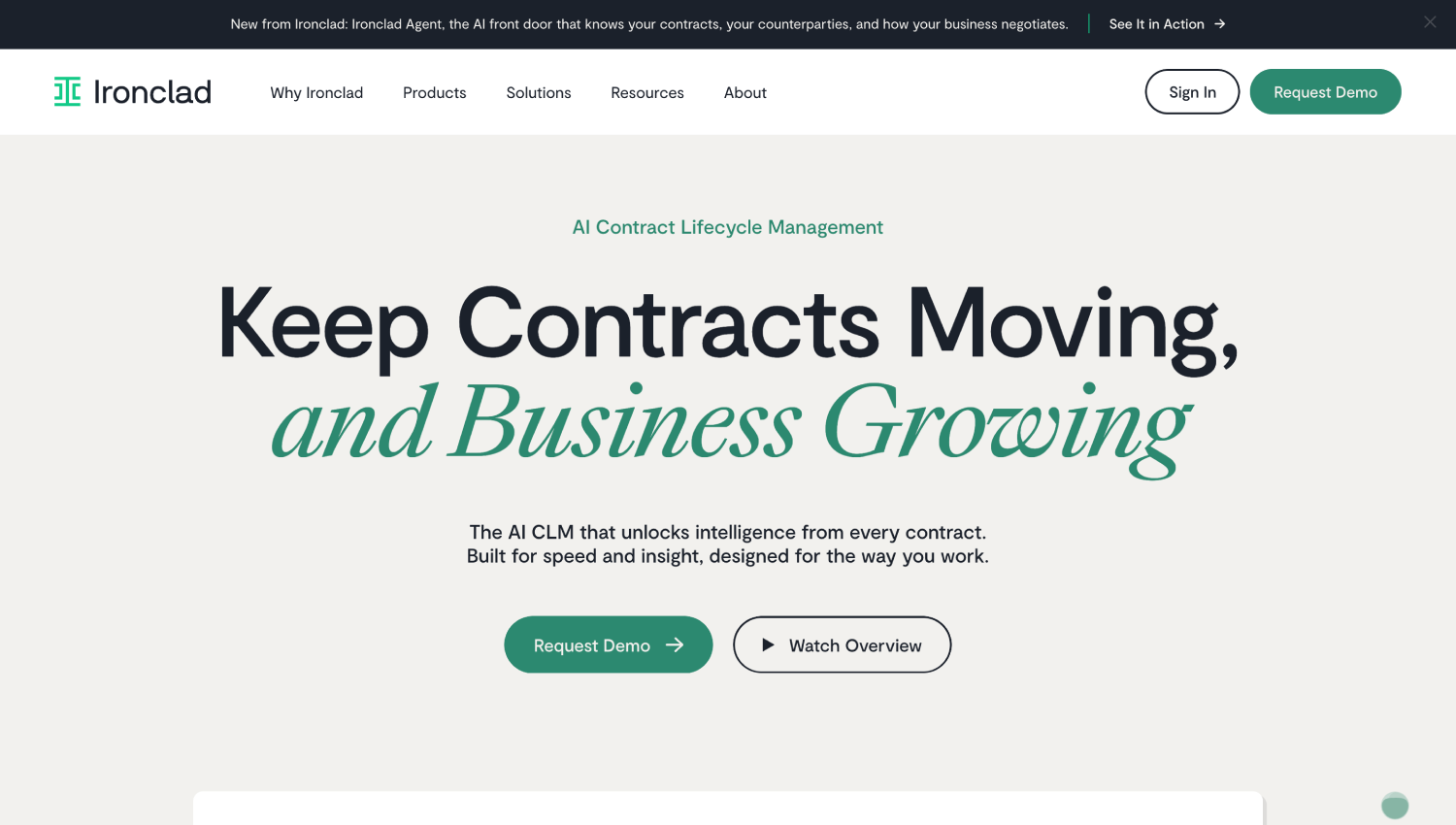
Best for: Enterprise legal operations teams with complex, conditional approval logic.
Ironclad is an enterprise CLM platform and the alternative here closest to Icertis in scope. Its no-code Workflow Designer models routing paths with conditional logic, Smart Import brings legacy contracts into the repository with AI extraction, and Ironclad sells its own eSignature product.
What speeds setup: Ironclad sells implementation as packages, from a self-start option with no implementation fee to engagements led by a dedicated legal engineer, so you buy as much help as the configuration needs. Its implementation page features Uplight, which replaced a legacy CLM in under a month, but its pricing and implementation pages don’t state a standard duration.
Pricing model: Custom quote (as of October 2026).
Limitation: Ironclad’s pricing FAQ says some integrations are included and others are add-ons. Get the integration list priced before you compare Ironclad’s quote with a lighter tool’s, because that line is where enterprise CLM quotes most often grow.
5. HyperStart CLM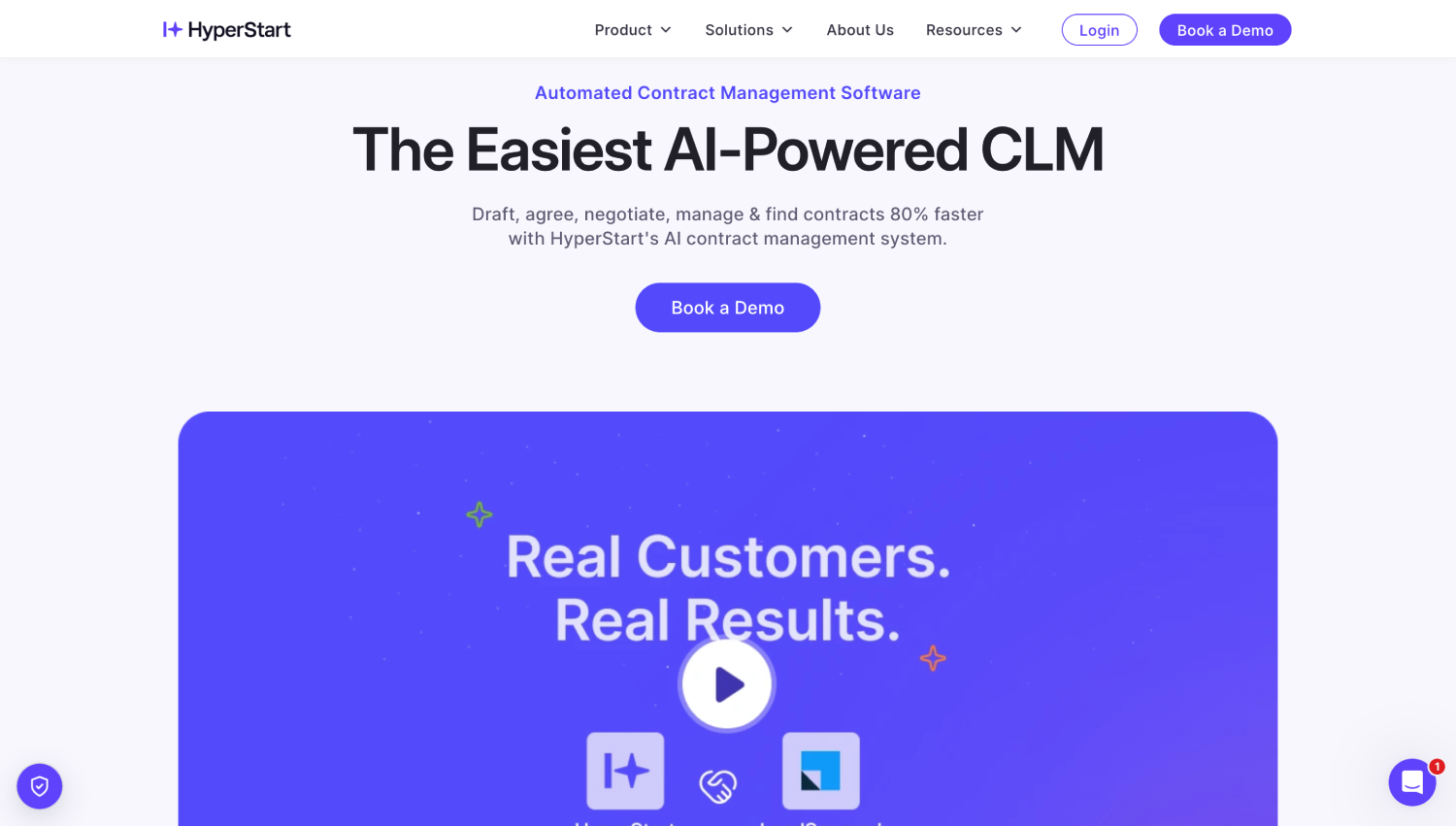
Best for: Mid-market teams that want a legacy repository moved into a CLM quickly.
HyperStart CLM is an AI-powered contract lifecycle management platform aimed at mid-market companies. It covers contract creation, approvals, signing on the platform or through integrations, a searchable repository and renewal tracking.
What speeds setup: The accelerator is the import. Smart import loads legacy contracts in one step and tags their metadata with AI, and HyperStart’s pricing page says its team migrates legacy contracts and configures workflows as part of the plan. Every account gets a named success contact from week one.
Pricing model: Priced on users or contract volume, never both at once, with implementation included (as of October 2026).
Limitation: The free trial lasts 7 days, which shows the repository and AI tagging but not a real contract moving through procurement, legal and finance. HyperStart also offers a custom proof of concept, so run that on your own contracts, and confirm which of its three published implementation durations your quote uses.
6. LinkSquares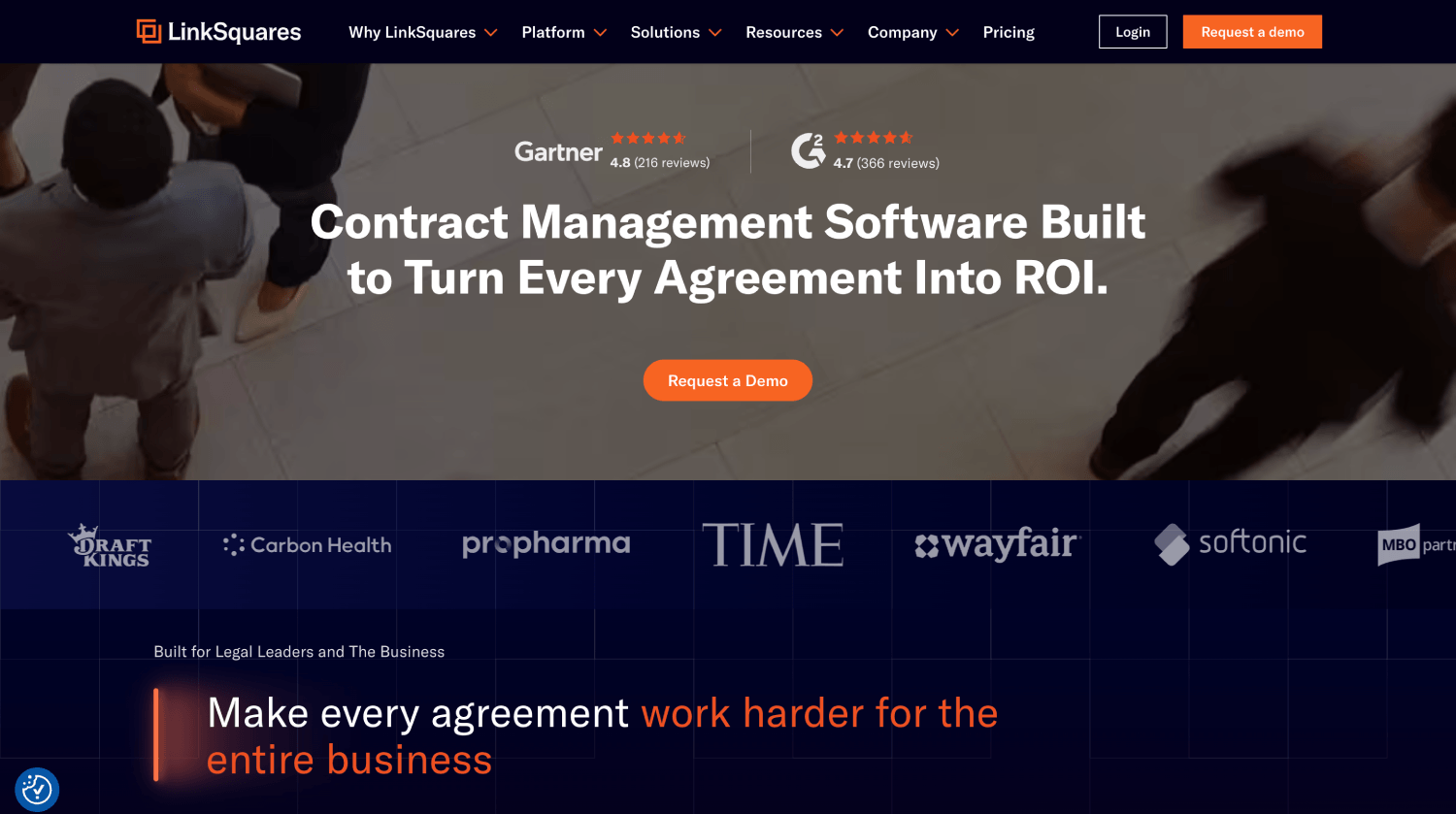
Best for: Legal and finance teams that want a consultant-led rollout with reporting in place at go-live.
LinkSquares is a CLM platform that pairs AI contract analysis and reporting with contract creation and approval workflows. Its onboarding plan ends with your contracts centralized in one repository and your reporting set up.
What speeds setup: A dedicated LinkSquares implementation consultant runs a 12-week plan in three blocks: foundation in weeks 1 to 4, refinement in weeks 5 to 8, then adoption and go-live in weeks 9 to 12. LinkSquares says most customers are fully up and running within 90 days and some within six weeks.
Pricing model: Personalized quote based on users, contract volume, selected modules and implementation support, and LinkSquares states that it is upfront about implementation costs (as of October 2026).
Limitation: The rollout is structured rather than self-serve, so a first approval workflow inside 30 days is not what the plan is built for. Choose LinkSquares when a complete, consultant-run rollout matters more than early speed on one workflow.
7. Concord
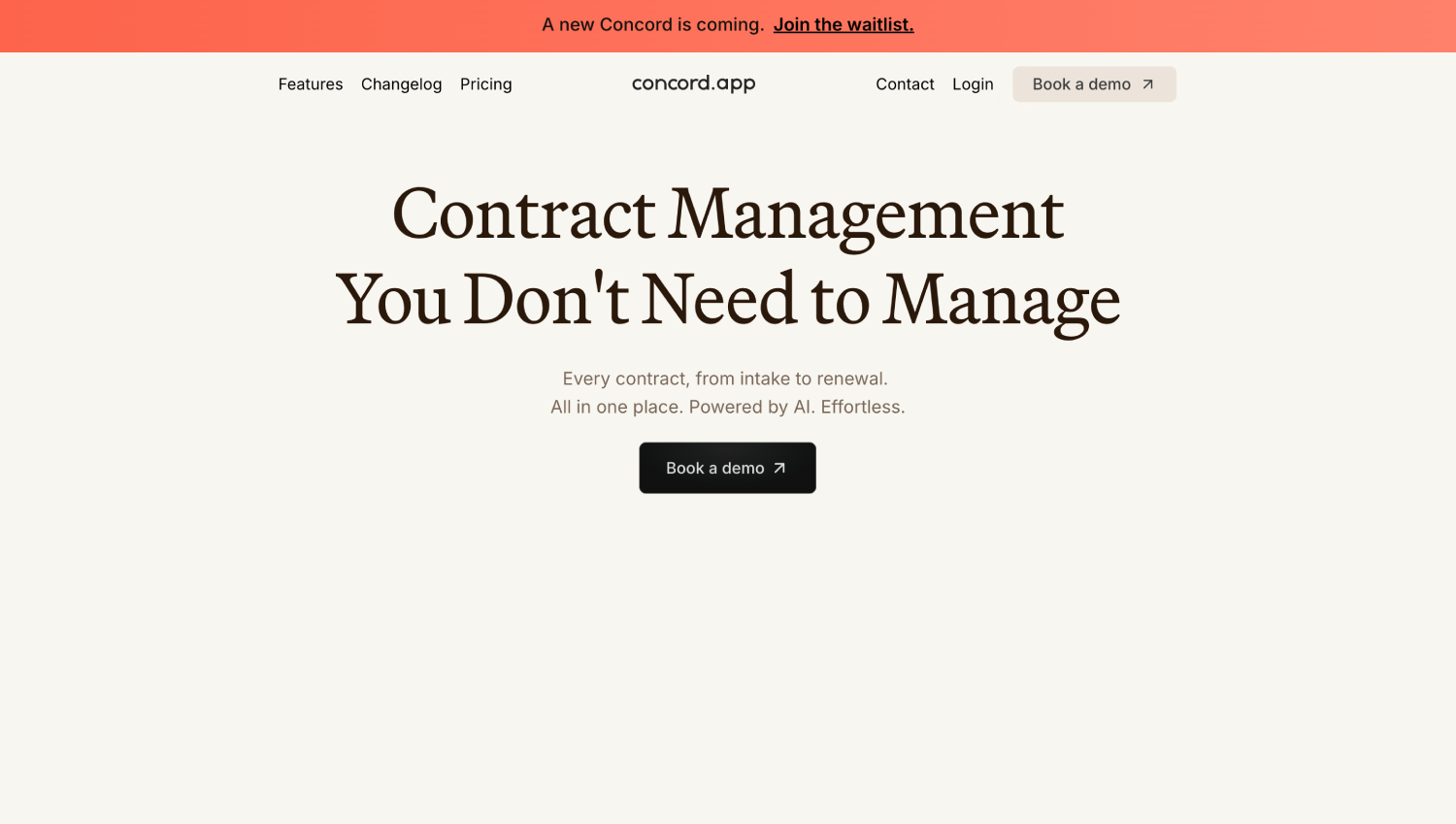
Best for: Small teams that want published pricing and a fast self-serve start.
Concord is a contract management platform for small companies and single teams, with built-in e-signature, a searchable repository, and deadline reminders. It is one of the few CLM vendors that publishes its plan prices.
What speeds setup: Concord reports that 85% of its customers complete core configuration on day one and that full organizational adoption typically takes 2 to 3 weeks. Every plan includes unlimited e-signatures, unlimited documents, and unlimited free viewers and guests.
Pricing model: Published plans paid annually, each with 5 users included; Essentials starts at $499 per month (as of October 2026).
Limitation: Intake forms and approval workflows start on the Business plan, along with integrations with Salesforce, HubSpot, Google Drive, Box, Dropbox, and Zapier. The clause library, subsidiary management and Open API sit on Enterprise. A procurement team that needs routing by value will be on Business at least.
8. Oneflow
Best for: Sales teams that create and negotiate contracts from CRM records.
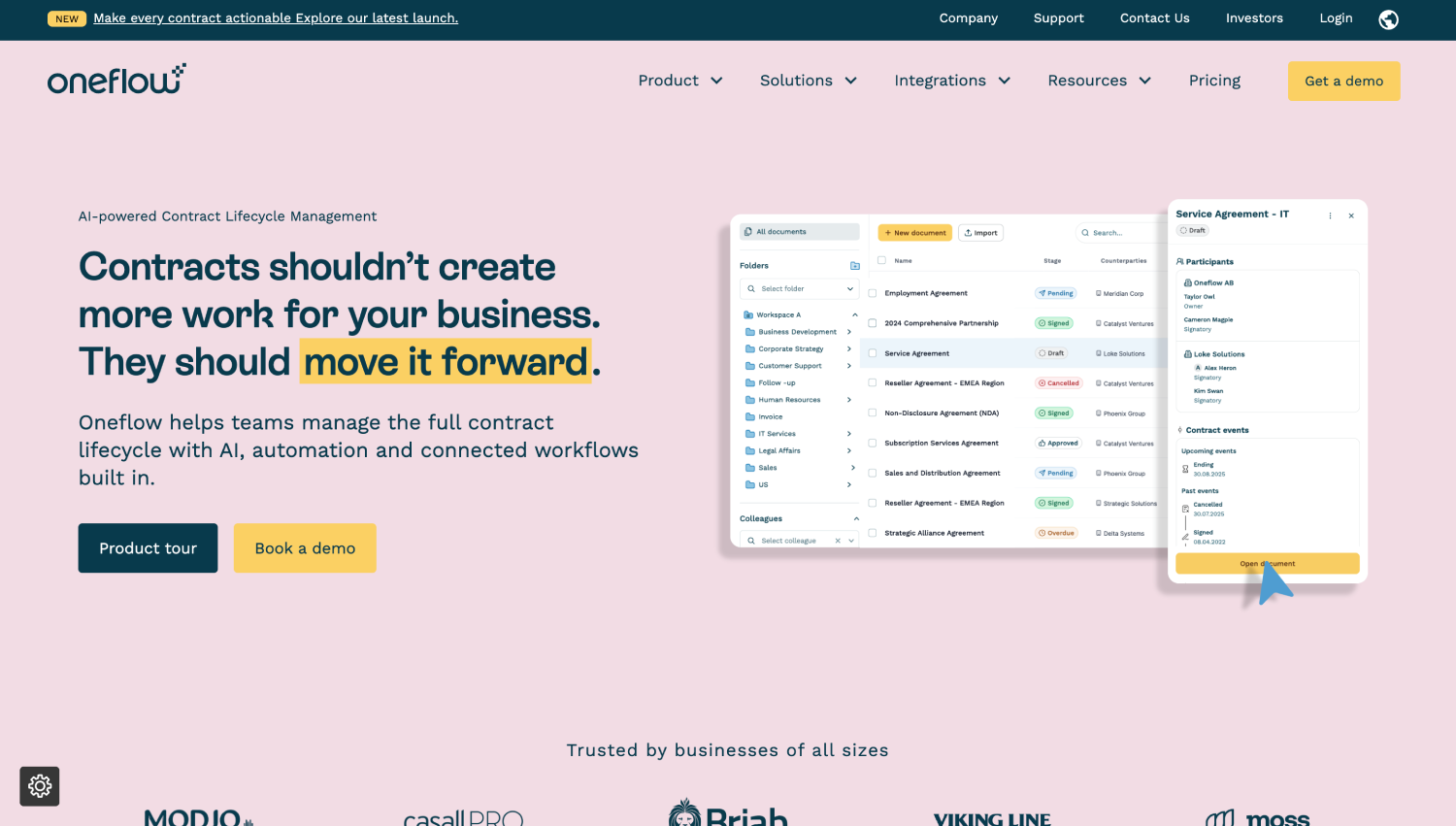
Oneflow is a contract platform that treats contracts as live web documents that teams create, negotiate, sign and manage in the browser. Reps create a contract from a Salesforce, HubSpot, Microsoft Dynamics 365, or Pipedrive record, the customer comments and signs in the same document, and contract data syncs back to the CRM.
What speeds setup: A 14-day free trial with no credit card gives you the full platform and guided onboarding, so you can test it on a real deal before anyone signs an order form. Oneflow’s pricing and comparison pages don’t state an implementation duration.
Pricing model: Annual plans only; Business includes 5 users, and Enterprise is a custom quote with 10 users included (as of October 2026).
Limitation: Oneflow’s pricing page lists its plug-and-play Salesforce and Microsoft Dynamics integrations as paid add-ons on both plans. Other systems, including an ERP, connect through the API, Zapier, or Power Automate, so scope that work first if your supplier contracts start in the ERP.
How does FlowForma Contract handle a supplier agreement from request to signature?
In FlowForma Contract, a supplier agreement moves through five steps: request intake, policy-based routing and approval, quote or tender evaluation, drafting against your playbook with e-signature, then obligation and renewal tracking. Agents do the routine checks inside rules your team writes, and every step is logged for audit.
The worked example
Take a new facilities services agreement whose value sits above your standard approval threshold.
- Purchase request: The requester submits it through a form, an email, or a Teams message. The procurement agents turn it into a complete request and ask for anything missing before it moves on.
- Review and approval: The routing agent sends it to the right budget holder and buyer based on value, category, and your delegation of authority. Approvals can be multi-level, parallel, and cross-department, and the approvals agent auto-approves only what your rules allow.
- Quotes or tender evaluation: The procurement agent compares quotes and checks suppliers against your approved list. If you run a tender, the tender evaluation agents collect every response, give each evaluator the same criteria, and route the award for approval.
- Contract and signature: The drafting agent builds the first draft from your approved templates and clause library, using details already in the request. The legal review agent flags clauses that differ from your standard positions, so only risky ones reach legal, and approval and e-signature run in one flow.
- Performance and renewal: The contract management agents record key dates, notice periods, and obligations with their owners, and alert the owner before each notice date with a renewal brief.
What to ask any vendor to show for the same flow
Bring this agreement to every demo. Ask where the request starts, who maintains the routing rules after go-live, and what the audit record shows for step 2. A vendor that can only show a standard NDA hasn't shown you your process.
If your scope also covers purchase orders and supplier onboarding, our guide to procurement automation software compares that wider field.
The fastest way to check a speed claim is to build the flow yourself. Start a free 30-day trial of FlowForma Contract and run your own supplier agreement through it, no credit card required.
Should you switch from Icertis or stay?
Switch when most of your volume is standard agreements, the business needs a first workflow live within a quarter, and you use few Icertis features. Stay when you depend on multi-entity obligation tracking or native SAP Ariba contracting. Either way, get the go-live definition and milestone dates in writing before you sign.
The decision rule
- If procurement owns the problem and purchases, tenders and contracts need one rules-based approval flow, choose FlowForma Contract, because intake, approvals, drafting, and renewals run in one product with every decision logged.
- If legal mainly needs fast commercial contracting with vendor-run onboarding, choose Juro or SpotDraft, because both sell onboarding built to reach a first live workflow in weeks.
- If you need obligation tracking across many entities and native SAP Ariba contracting, stay on Icertis and phase the rollout, because nothing on this list replaces that depth.
If you're already partway through an Icertis rollout
Whether to switch mid-rollout depends on where the delay comes from, not on what you’ve already spent. If the delay comes from scope, cut the first release to one contract type and one business unit, and if you run SAP Ariba, ask whether SAP Ariba Contract Intelligence by Icertis fits your stack.
If the delay comes from the platform being more than your process needs, run a parallel pilot on one workflow before you give notice. You'll learn more from four weeks of live contracts than from another steering committee.
Eight questions to get answered in writing
- Which milestone does your quoted timeline describe?
- What must we provide, and by when, for that date to hold?
- What was the median duration for customers of our size and contract volume?
- How many legacy contracts does the quote include in migration?
- Who builds and maintains each integration, and at what cost?
- How many training hours do admins and end users get?
- What are the acceptance criteria for go-live?
- What happens, contractually, if the date slips?
What turns a four-week CLM rollout into a six-month project?
Six factors stretch CLM rollouts: messy legacy contract data, many approval variants, custom ERP integrations, security review, scarce stakeholder time and a large template estate.
Each has a mitigation, such as launching one contract type first. The same levers shorten an Icertis program, for example through its preconfigured SAP Ariba integration.
None of these factors belongs to one vendor, which is why a four-week quote and a six-month outcome can both be true.
|
Factor |
Why it adds time |
Mitigation |
|
Legacy contract data |
Scanned files, missing metadata and duplicates must be cleaned and checked before cutover |
Agree which fields must be validated by a person and spot-check the rest of the AI extraction |
|
Approval variants |
Every exception to the delegation of authority becomes another branch to build and test |
Launch one contract type with one approval path, then add variants |
|
Custom ERP integration |
Field mapping, testing and IT scheduling sit outside the CLM vendor’s control |
Go live on a standard connector or a manual export, then build the integration |
|
Security review |
Questionnaires, single sign-on and data-residency checks run on the security team’s calendar |
Send the vendor’s security documentation to IT before contract signature |
|
Stakeholder time |
Legal, finance and procurement reviewers sign off templates and rules alongside their day jobs |
Name one owner per contract type and book review sessions at kickoff |
|
Template estate |
Every template needs fields, clause variants and an owner before it can be automated |
Start with the templates that carry most of your contract volume |
Most of these factors sit on your side of the contract. A vendor can shorten configuration, but it can’t approve your templates, run your security review or free up your approvers.
So when a vendor quotes four weeks, ask which of the six factors the figure assumes away. A quote that excludes migration, integrations and security review is a quote for a first workflow, not for production.
Write the factors you own into the project plan with names and dates, and hold the vendor to the ones it owns.
Choosing your Icertis alternative
If your bottleneck sits between a purchase request and a signed supplier contract, the Icertis alternatives that are quicker to implement put procurement, sign-off and drafting on one flow. FlowForma Contract is built for that job.
If legal's queue of commercial contracts is the problem, start with Juro or SpotDraft. If you run thousands of agreements across entities on SAP Ariba, phase your Icertis rollout instead of replacing it.
Book your demo, and bring one supplier agreement you'd like to see run end to end.